
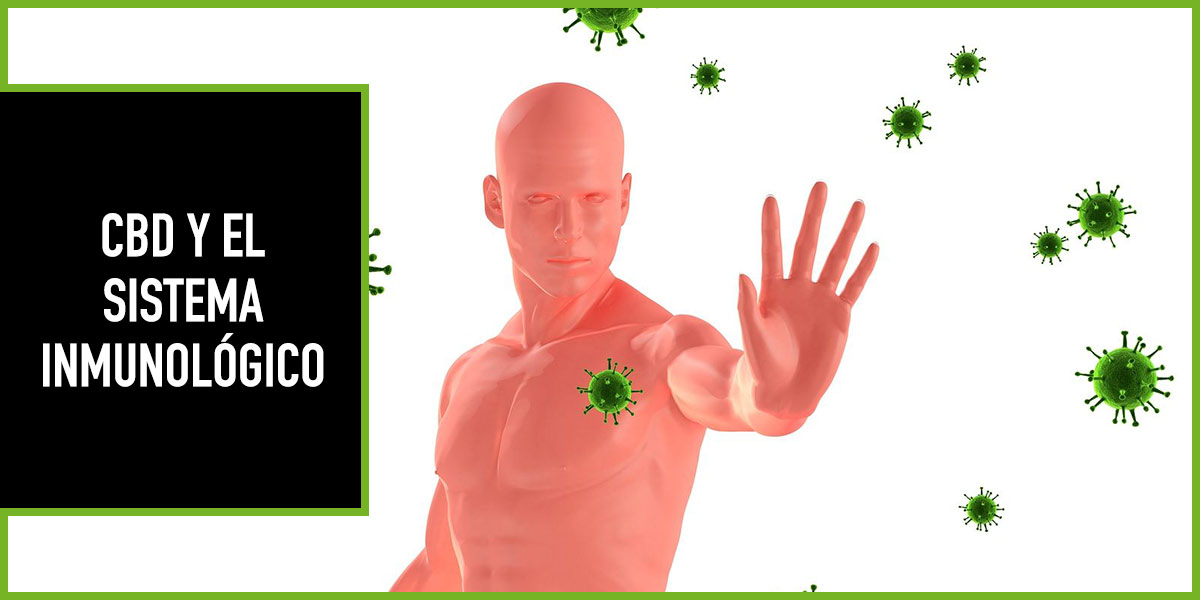
Since its beginnings as a source of research due to the spectrum of medicinal properties it encompasses under a zero parameter of psychoactive effects, cannabidiol (CBD) has shown itself to be an optimal phytocannabinoid for the treatment of various diseases and with a positive impact on the immune system.
Understanding the help that cannabidiol provides as an immune system enhancer involves understanding how this system works and the medical capabilities of CBD in its intervention with it.
What is the immune system?
The immune system (IS) is the body 's defense mechanism against infections, attacking invading germs and providing the necessary protection to maintain our health in perfect condition.
The detection of antigens by the immune system is the cornerstone of its function. The recognition and elimination of foreign substances are the core of the immune system's work.
This defense work is based on the collaboration between cells and organs, in which leukocytes take on a special role. These white blood cells play priority functions in the body's defense.
How does the immune system work?
The immune system works by detecting and eliminating antigens that invade the body . To do this, it produces antibodies that neutralize these antigens. The human body has three types of immunity: innate, adaptive, and passive.
We are all born with innate, natural immunity ; the skin itself is an example of the human body's protective capacity. But we also have a passive protection model whose origin is external and whose duration is relatively short, such as the antibodies supplied through breastfeeding.
It is throughout our lives that we develop our true defensive structure, known as adaptive or active immunity . This type of protection constitutes our body's true strength against antigens and is built through exposure to diseases and vaccination protocols.
Correct functioning of the immune system involves managing the body's natural defense without causing any type of damage. When this protocol does not work perfectly, the immune response is weakened and autoimmunity occurs.
Autoimmunity is an attack by the immune system on healthy tissues and organisms, producing autoimmune diseases such as cancer , multiple sclerosis , allergies, or HIV/AIDS.
Endocannabinoid system
Known by the acronym ECS, the endocannabinoid system is a neurotransmitter structure composed of cannabinoid receptors and endocannabinoids that interact with each other and are located in the brain and in different organs, tissues, glands and immune cells.
The activity of the ECS in each location is different, but its common function in all of them is homeostasis , maintaining the balance of a stable internal environment regardless of the variation in the external environment.
Thus, the endocannabinoid system ensures biological harmony and inter-system coordination despite environmental changes that affect different body systems and the functions related to each of them.
This is possible through the regulation of essential functions that allow the correct functioning of the cells of organisms within ideal ranges of conditions in media whose parameters are variable.
The ECS is involved in almost all physiological processes, having the ability to influence pain, appetite, stress , sleep or immune function ; moderating these processes through its CB receptors.
CB1 receptors are located in the brain and are involved in regions responsible for mental and physiological processes. CB2 receptors are located in the immune and nervous systems, as well as in various organs and glands. Their activity is particularly linked to CBD's function as an anti-inflammatory agent.
Pharmacological capabilities of CBD
The cannabinoid CBD has been shown to have a positive effect on neurogenesis and neurodegeneration ; that is, on the creation and death of both brain cells and nerve tissue. These two elements play a fundamental role in health and the proper functioning of the immune system.
Different laboratory studies on the hemp plant have obtained positive and promising results on the use of cannabidiol as a natural treatment for patients suffering from head trauma, stroke, cerebral ischemia and atrophy.
While the effects of CBD have been a beacon of hope for treatments with minimal side effects, the effect of its qualities depends on the human body's ability to acquire and absorb the beneficial properties of cannabinoids, with factors such as weight, height, age, diet, and habits coming into play.
Among the capabilities of CBD are its sedative effect , reduction of short-term memory loss , and its stability and insensitivity to oxidation, making it a long-lasting agent for use in the immune system.
What is the relationship between the immune system and cannabinoids?
The distribution in different systems and organs of the human body is a common factor between the immune system and cannabinoids, hence the immune system shows optimal functioning through the functions of endocannabinoids.
This relationship allows cannabinoids such as CBD to help the system and prevent autoimmune and inflammatory responses that cause greater pathological damage.
CBD and immune system
The anti-inflammatory properties of CBD help the immune system reduce inflammation, which is the root cause of most autoimmune diseases. Therefore, CBD is proving to be a very effective component for strengthening the immune system.
Both hyperactivity and a weakened immune system are counteracted by the positive effects of CBD due to its ability as an immune suppressant, while its potential for pain reduction helps with any pathology that includes this symptom in its picture.
Clinical studies linked to CBD and the immune system
During various investigations focused on specific cannabinoids, such as CBD, in types of autoimmune pathologies, it has been proven that cannabidiol positively regulates the immune system without depressing it.
The catalytic effect on the production of T cells, responsible for protecting the body against infections, as well as the elimination of immunological “memory” reduces the possibility of future autoimmune interference.
During preclinical studies, the analgesic and anti-inflammatory effect of CBD in controlled amounts and its ability to activate CB2 receptors in order to inhibit the harmful effects of immune system cells were already anticipated.
These preclinical findings have allowed for further studies focusing on the functions of the cannabinoid CBD as an aid to the immune system for the restoration of homeostatic balance, protection against the autoimmune response, and inhibition of the functions of hyperactive cells to prevent the activation of an attack by the system itself.
In various investigations, the regulatory function of CB2 receptors in complex networks of the immune system has been taken as a basis to demonstrate that their activation can inhibit the immune response, which is also useful for patients with autoimmune diseases.
CB2 receptors inhibit the production of proinflammatory cytokines and stimulate the production of their antagonists, anti-inflammatory cytokines. This blocking and catalyzing process helps restore homeostasis.
How does CBD help the immune system?
The detection and elimination of pathogens by the immune system is carried out through two pathways: cell-mediated immunity and humoral immunity. The balance between both disease-fighting mechanisms is what guarantees the optimal functioning of the IS.
The endocannabinoid system, for its part, performs a supervisory and regulatory control between both responses, so the stimulation of the system through CBD helps to improve health status, the necessary balance, responsiveness and the totality of the functions of the immune system.
The effect of CBD on the ECS directly involves them in the proper functioning of the SI, since the cannabinoid acts as a modulator of the latter through a regulatory function, restoring balance whenever its functioning occurs incorrectly in excess or insufficiently.
CBD treats autoimmune reactions by modulating the immune system, reducing inflammation through its anti-inflammatory potential, and supporting the digestive system.
Its application meets treatment criteria for the symptoms of autoimmune diseases, affecting chronic pain, inflammation and spasms.